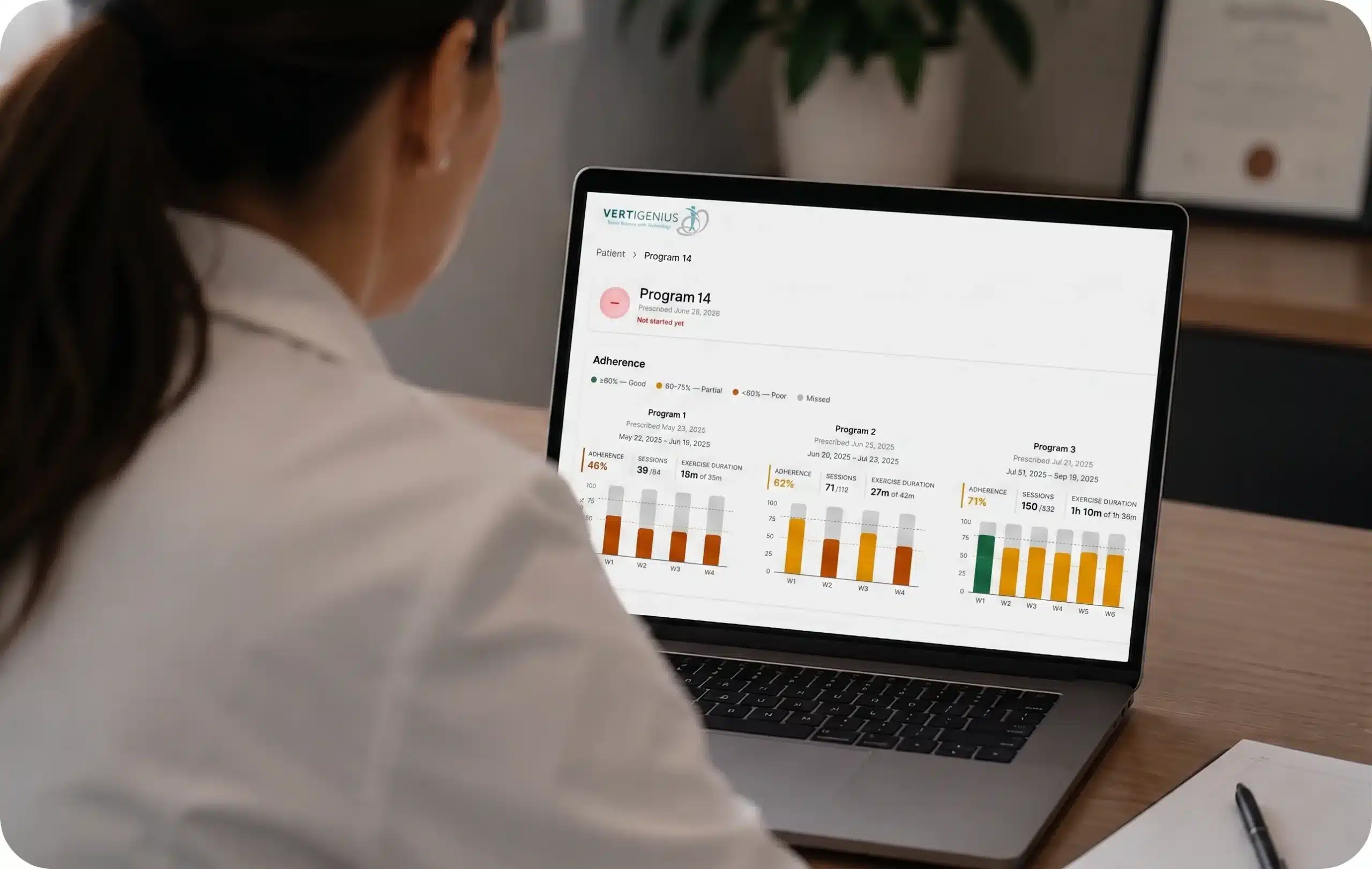
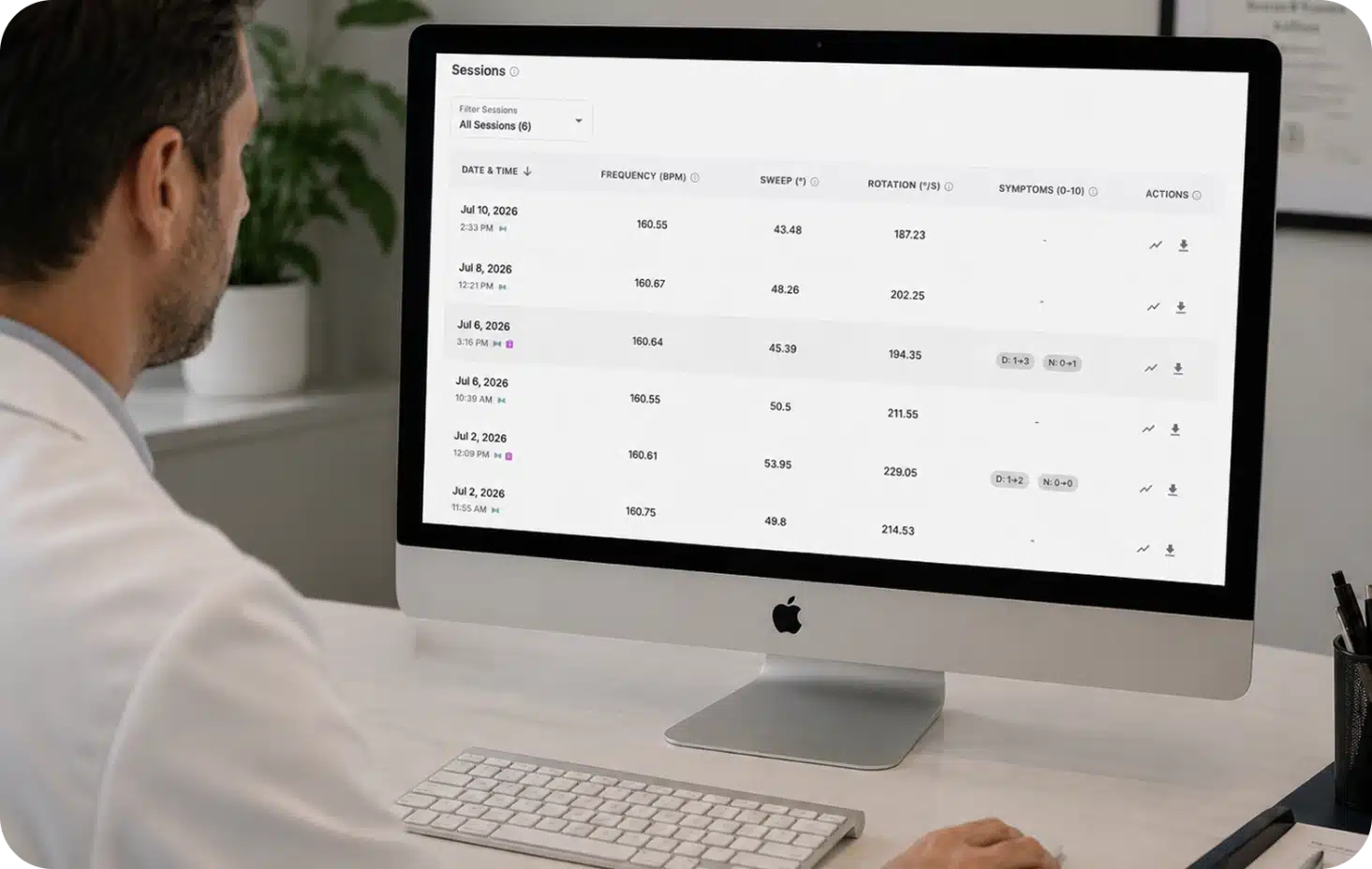
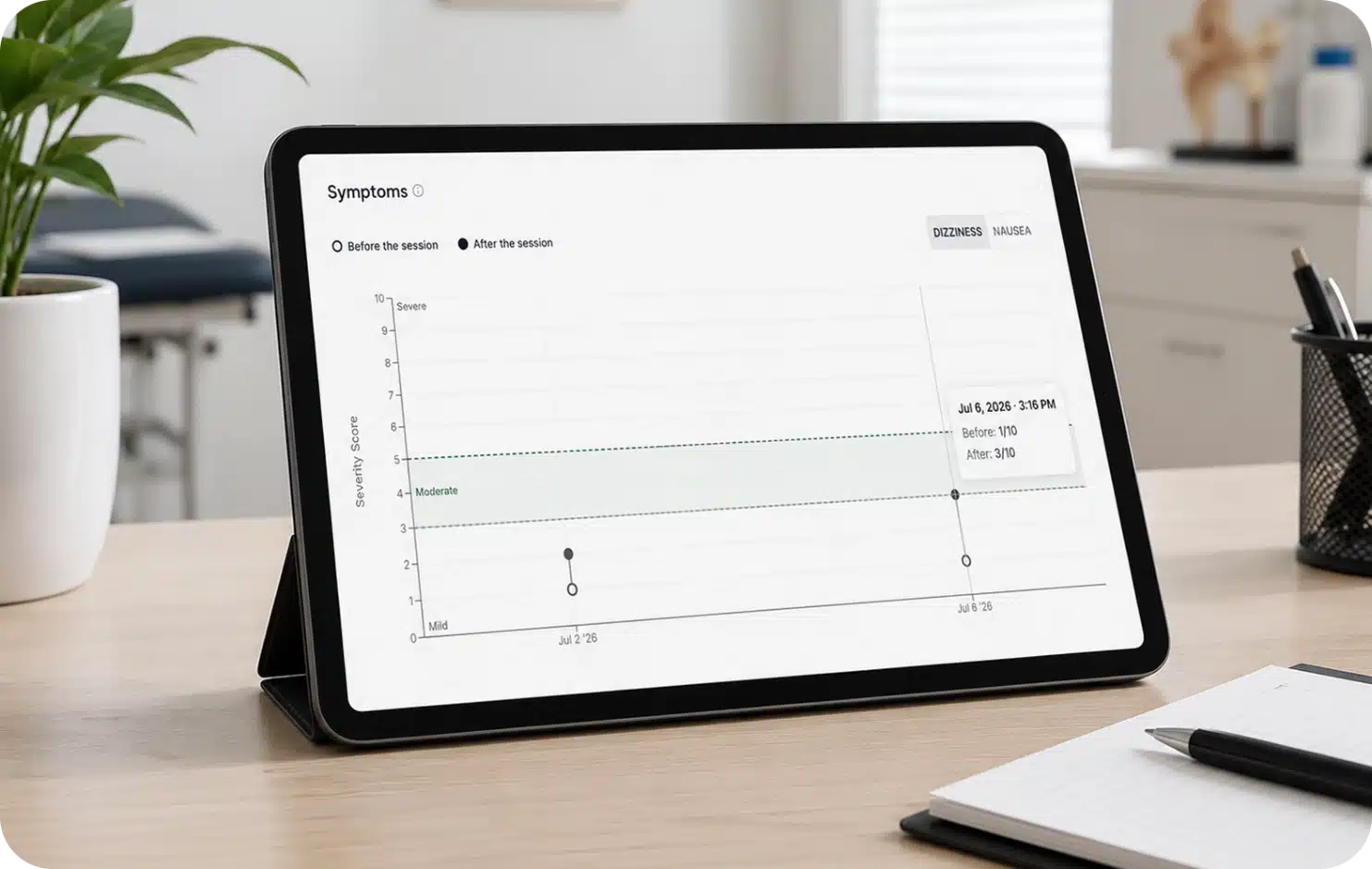
The Vertigenius™ Clinician Portal provides a centralized workstation to design targeted Vestibular Rehabilitation Therapy (VRT) programs, track physiological metrics asynchronously, and modify care plans in real-time. Engineered to support Remote Therapeutic Monitoring (RTM) workflows without sacrificing clinical autonomy.


Most generic rehabilitation platforms can prescribe exercises and record whether a patient completed them.
Vertigenius™ goes further.
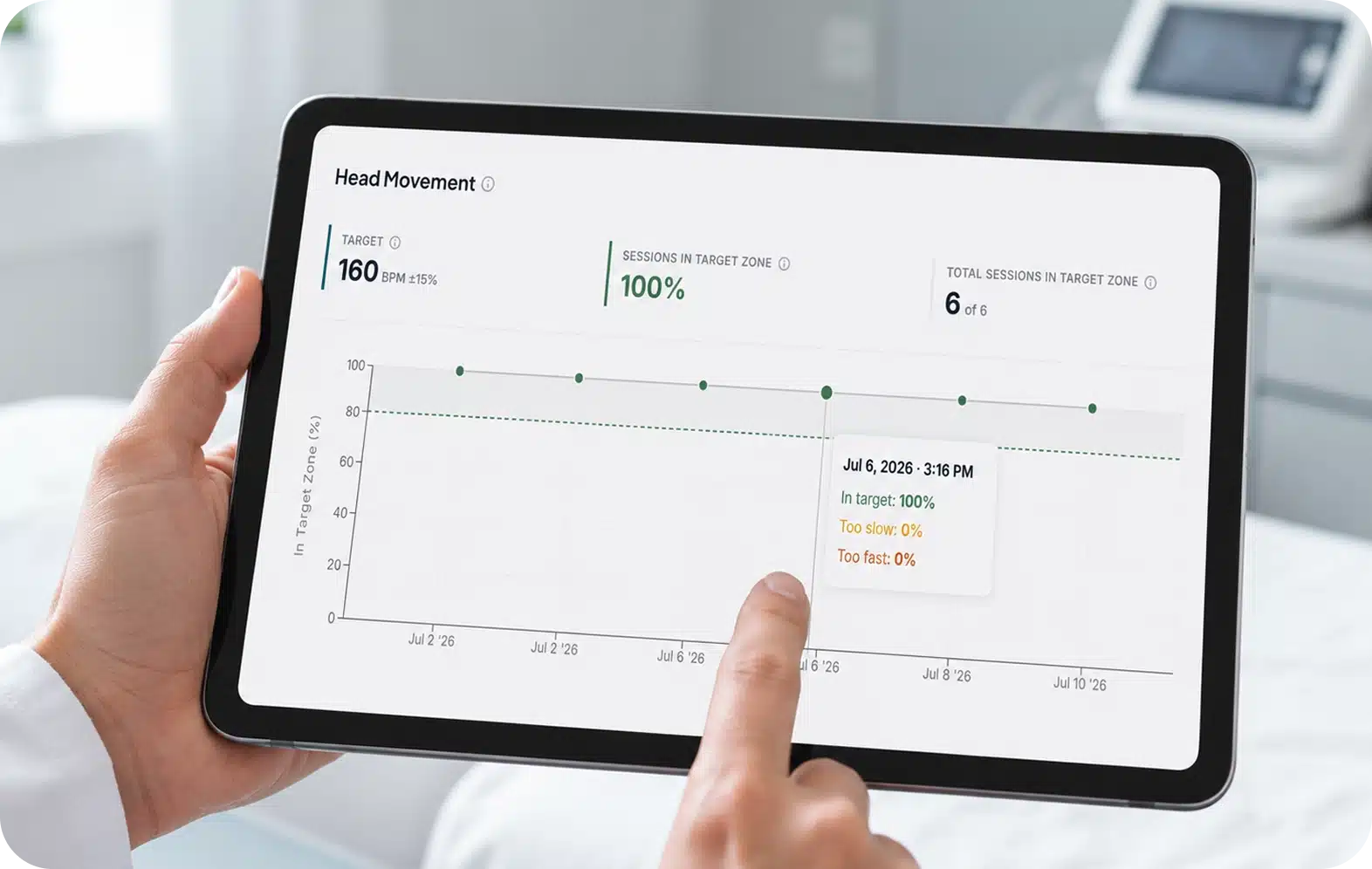
Using the wearable Head Sensor, the Clinician Portal measures the patient’s head movement during rehabilitation, including head velocity, movement quality and performance against prescribed targets.
Instead of relying solely on self-reported adherence, clinicians receive objective kinematic data that shows how exercises were performed, not just whether they were completed.
This gives clinicians greater confidence when progressing treatment, identifying patients who are struggling, and making evidence-based clinical decisions between appointments.
The wearable Head Sensor captures objective head kinematics during vestibular rehabilitation, data that cannot be gathered through patient reporting alone.
See whether patients are achieving prescribed movement speeds and ranges during every exercise, helping ensure rehabilitation is performed correctly.
Visualise trends in head-movement performance across sessions to support informed clinical decisions and confident programme progression.
Unlike generic rehabilitation platforms, Vertigenius™ combines exercise prescription with objective movement measurement.
The integration of the Clinician Portal, Patient App and wearable Head Sensor lets clinicians monitor not only patient engagement, but rehabilitation quality, bringing measurable, data-driven vestibular care beyond the clinic.
Design, configure, and deploy validated VRT protocols using an extensive library of 400+ specialist-led video exercises, instantly synchronizing modifications to the patient app.
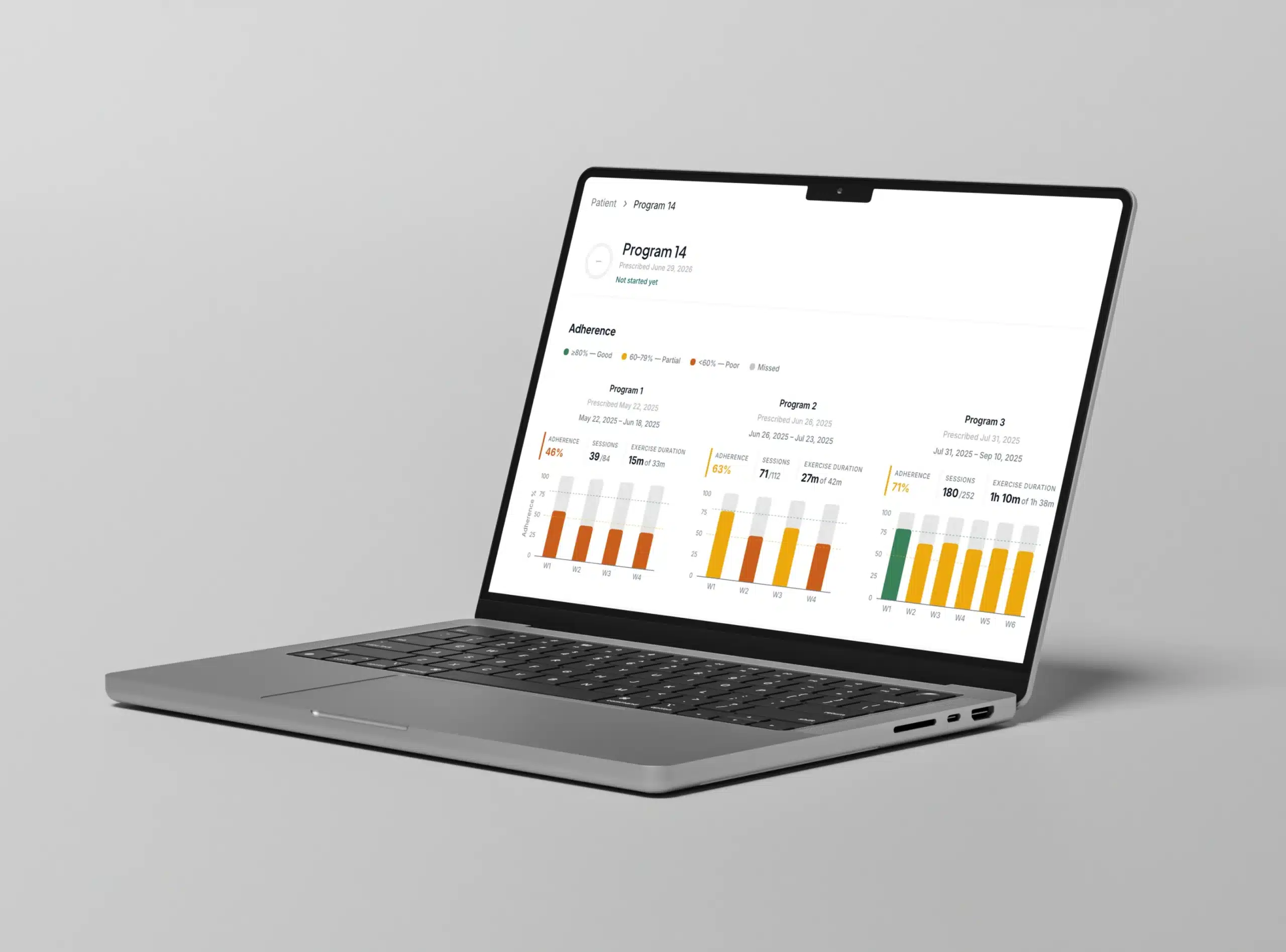
Access objective, data-driven compliance metrics to track exactly how, when, and if patients complete their home exercises, allowing for precision adjustments between scheduled appointments.
Send reading material and media so patients better understand the treatment plan. A bit of context can make all the difference for repetition and confidence.
Choose from a 400+ specialist-led video library, adapt parameters for the patient in front of you, and push the programme straight to their app.
When you next see them, you have adherence and performance data ready — not just a half-remembered update.
Published usability findings around the wider Vertigenius™ system reported strong therapist usability and described the clinician-facing side as easy and quick to use.
Which is probably the real test — not whether the software looks clever, but whether it helps without slowing the clinician down.
Wearable sensor and smartphone-assisted vestibular physical therapy for multiple sclerosis: usability and outcomes
Clinical trial data demonstrating high compliance rates and measurable balance optimization in patients managing neurological vestibular deficits.
Toward a Digital Health Intervention for Vestibular Rehabilitation: Usability and Subjective Outcomes of a Novel Platform
Peer-reviewed research validating the software’s systemic usability, ease of integration into existing clinic workflows, and positive patient safety outcomes.
The portal allows healthcare providers to conduct standardized vestibular assessments, build customized exercise prescriptions from a library of 400+ videos, track remote patient compliance data, and analyze objective head-movement metrics captured by the wearable sensor.

No. The portal is a cloud-based web application designed for both point-of-care clinical use and asynchronous remote care management, allowing you to monitor patients while they exercise at home.
Yes. The portal displays real-time and historical patient adherence data, visual progress charts, and performance feedback pushed directly from the patient’s smartphone app and wearable sensor.
Not at all. Vertigenius™ is built around existing clinical workflows. Published validation studies confirm excellent clinician usability scores, showing that therapists can typically configure and deploy a custom patient program in just a few clicks.
The Clinician Portal is one side of the system — the patient app and head sensor are what bring the prescription to life at home.
Programmes built in the portal flow straight to the patient’s phone, with guided video and supporting material.
A wearable sensor measures head movement during home exercises, feeding objective performance data back to you.
Step back and see how the portal, app, and sensor work together across the full rehab journey.
If you want to prescribe more clearly, monitor more closely, and spend less time guessing what is happening between visits, the best next step is to see the portal for yourself.