Vestibular disorders can arise from a wide range of causes, from inner ear dysfunction to neurological injury. Despite their differences, these conditions share a common challenge: dizziness, imbalance and reduced confidence in movement.
Vertigenius™ was designed to address these challenges head-on. By combining clinical expertise with digital precision, Vertigenius™ enables clinicians to deliver structured, measurable and patient-centred vestibular rehabilitation in clinic and beyond.
Treating Peripheral Vestibular Disorders
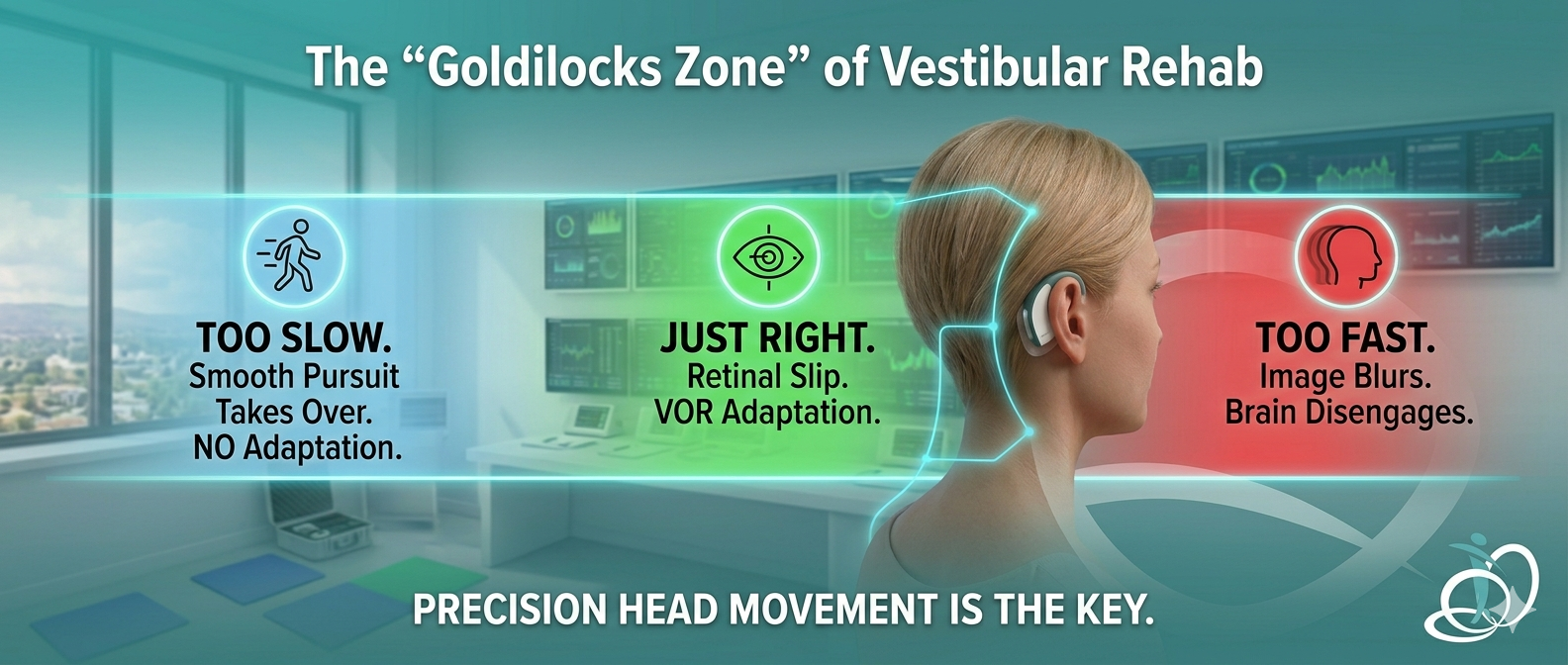
Peripheral vestibular disorders are among the most common causes of dizziness. Vertigenius™ supports rehabilitation through gaze stability, habituation and balance exercises tailored to each patient’s impairments.
Common conditions include:
- Benign Paroxysmal Positional Vertigo (BPPV) – including residual dizziness post-repositioning.
- Unilateral and Bilateral Vestibular Hypofunction – Restoring Gaze Stability and Balance.
- Ménière’s Disease – between acute episodes to reduce imbalance.
- Vestibular Schwannoma – pre- and post-operative rehabilitation to optimise recovery.
- Perilymph Fistula and Superior Canal Dehiscence Syndrome – addressing impairments in stability and motion sensitivity.
Managing Central Vestibular Disorders
Central vestibular disorders often present more complex rehabilitation needs, where symptom profiles extend beyond dizziness. Vertigenius™ provides clinicians with customizable exercise programs targeting visual motion sensitivity, oculomotor control and postural stability.
Supported conditions include:
- Vestibular Migraine – managing motion sensitivity and imbalance between episodes.
- Traumatic Brain Injury and Post-Concussion Syndrome – combining vestibular, oculomotor and cervical rehabilitation.
- Cerebellar and Brainstem Stroke – improving balance, gaze control and gait.
- Parkinson’s Disease and Multiple Sclerosis – addressing vestibular and multisensory deficits.
- Persistent Postural-Perceptual Dizziness (PPPD) – within a supportive, interdisciplinary framework.
- Mal de Débarquement Syndrome – retraining sensory integration and motion tolerance.
Supporting Multisensory and Age-Related Balance Disorders
With age or multisensory loss, balance control often declines. Vertigenius™ helps patients maintain independence through progressive balance and gait programs that are easy to follow at home.
Common uses include:
- Age-related vestibular loss
- Balance impairment due to multisensory deficits
- Fall risk and fear of falling
Post-Surgical and Mixed Presentations
Recovery after vestibular surgery or mixed central-peripheral conditions requires structured, adaptable rehabilitation. Vertigenius™ makes this possible with patient-specific exercise plans and progress tracking.
Indications include:
- Post-labyrinthectomy
- Post-vestibular nerve section
- Post-cochlear or vestibular implant
- Post-vestibular schwannoma resection or radiotherapy
- Mixed central and peripheral vestibular presentations
A Platform Built for Versatility and Measurable Progress
Across all these conditions, Vertigenius™ simplifies the complex.
Clinicians can:
- Customize exercises based on specific impairments
- Track adherence and outcomes remotely
- Adjust programs in real-time to match patient progress
- Support continuity of care between clinic and home
By focusing on impairments rather than diagnoses, Vertigenius™ ensures that every patient receives tailored, evidence-based care, whether recovering from BPPV, concussion, or complex central disorders.
From Diagnosis to Digital Recovery
Vertigenius™ brings structure, insight and accessibility to vestibular rehabilitation.
Whether you’re helping a patient regain confidence after a concussion or treating chronic dizziness, Vertigenius™ provides the tools to deliver measurable, meaningful progress.